
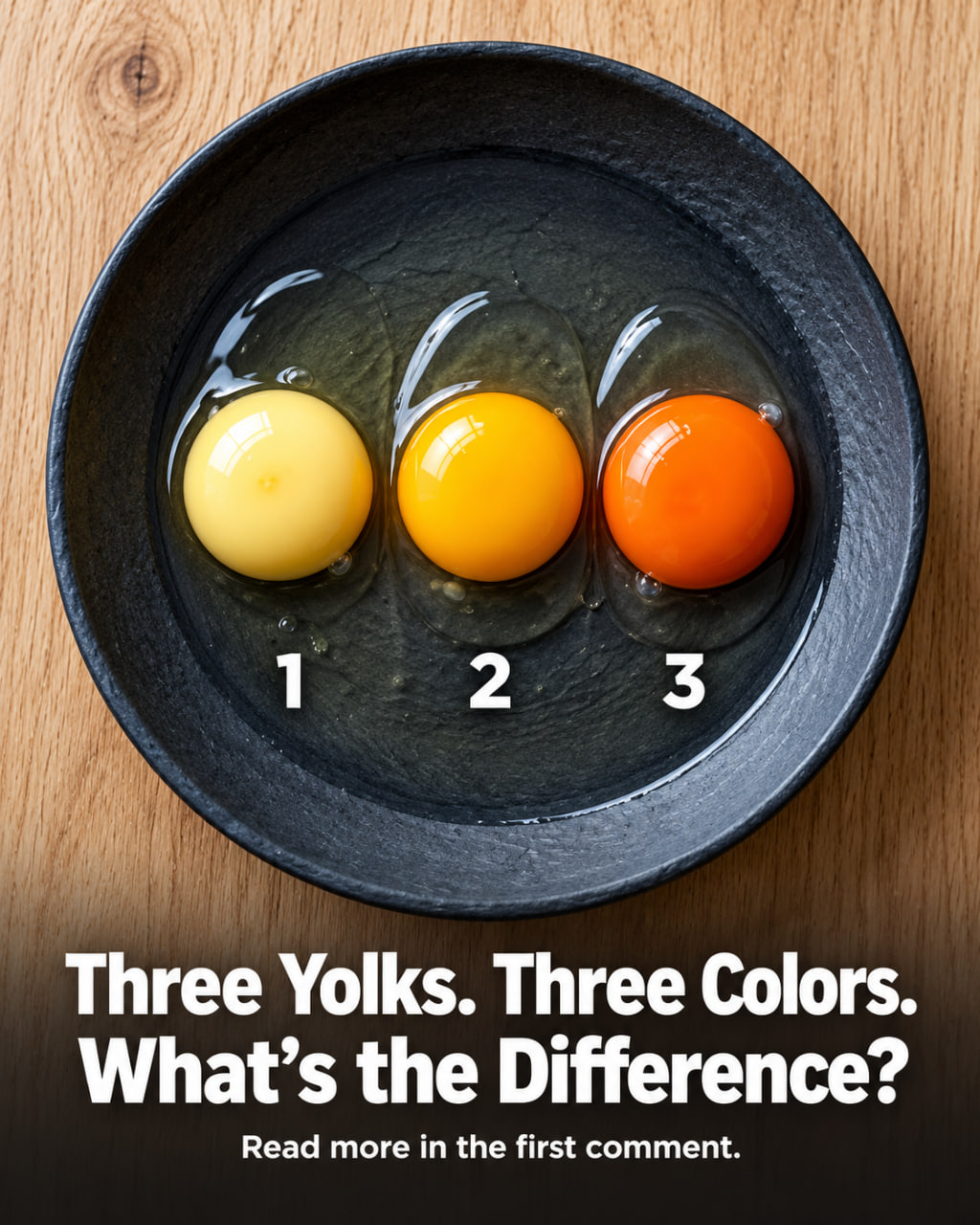
Crack three eggs into a plate, and you might find three different colors staring back at you. One yolk is pale yellow, another is golden, and the third is a deep orange.
The orange yolk often gets the most attention. It looks rich and appealing, which makes it easy to assume that it comes from a healthier chicken or contains more nutrients. The pale yolk, by comparison, can seem less impressive.
But appearance does not tell the whole story. The main reason egg yolks have different colors is the hen’s diet—not a simple difference between a good egg and a bad one. Understanding that distinction can help you judge eggs more fairly and avoid some common misconceptions.
Where Does the Color Come From?
Egg yolks get much of their yellow and orange coloring from pigments in the foods hens eat. These pigments belong to a group called carotenoids. Some, known as xanthophylls, are especially important in producing yolk color.
When a hen eats ingredients containing these pigments, her body absorbs them and deposits some of them into the developing yolk.
Yellow corn, alfalfa, leafy plants, and marigold petals can all contribute pigments. Different amounts and combinations in the feed can produce different shades.
This means a change in feeding can change the appearance of the eggs a hen lays. The color is partly a visible record of what she has been eating while those yolks developed.
What Do the Three Colors in the Picture Suggest?
The image shows a familiar range: pale yellow, golden yellow, and orange. These shades can illustrate differences in pigment intake, but they cannot identify the exact diet of a particular hen.
1. Pale Yellow
A pale yellow yolk commonly reflects a diet containing relatively little yolk-coloring pigment. Feed based on ingredients such as wheat or barley can produce lighter yolks.
A pale yolk does not, by itself, mean that the chicken was unhealthy or that the egg is poor quality.
2. Golden Yellow
A golden yolk generally reflects a greater intake of the pigments that give yolks their yellow coloring. Ingredients such as yellow corn and green plant material can contribute to this appearance.
It is a familiar color, but it should not be treated as a precise nutritional grade.
3. Deep Orange
An orange yolk can result from feed containing more concentrated pigments or a different combination of them.
The deeper color may be attractive, but it does not prove that the hen lived outdoors, received better care, or produced an egg that is superior in every nutritional respect.
Are Orange Yolks More Nutritious?
A darker yolk is not a reliable shortcut for deciding which egg is healthier.
A hen’s diet can influence an egg’s composition, so it would also be misleading to claim that every egg is nutritionally identical. However, color alone cannot tell you the full amounts of protein, vitamins, minerals, or fats in an egg.
Both pale yellow and orange yolks can be part of nutritious eggs. If you are comparing products for a particular nutritional feature, information on the packaging is more useful than the shade you see after cracking the shell.
Think of yolk color as a clue about pigments in the feed, rather than a complete nutrition label.
Does a Dark Yolk Prove the Hen Was Free-Range?
Hens with access to vegetation may eat foods that contribute more pigments to their yolks. This helps explain why some eggs from outdoor flocks have darker colors.
However, poultry producers can also adjust feed ingredients to produce a desired shade. A hen does not need to forage outdoors for her eggs to have deeply colored yolks.
For that reason, you cannot reliably identify housing conditions from yolk color alone. If farming practices matter to you, look for clear production information and credible certification rather than relying on a photograph of an orange yolk.
Can Farmers Influence Yolk Color?
Yes. Feed selection is one of the ways producers influence the appearance of eggs.
NC State Extension lists several ingredients that can affect yolk pigmentation, including corn gluten meal, alfalfa, and flower petal meal. Changing the amount of pigment-containing material in the diet can shift yolks toward a stronger yellow or orange.
This explains why a consistent color does not necessarily happen by chance. Producers may aim for a particular appearance because their customers prefer it.
It also explains why color should be interpreted carefully. A striking orange yolk may reflect a deliberate feeding choice, but that choice alone does not describe the hen’s entire diet or living conditions.
Does Yolk Color Change How an Egg Cooks?
A darker yolk can make a dish look more colorful. That visual difference may be especially noticeable in scrambled eggs or recipes where yolks contribute strongly to the finished appearance.
But yolk shade alone is not a reliable predictor of cooking performance or flavor. Illinois Extension explains that yolk color does not determine an egg’s cooking characteristics.
You can prefer the appearance of orange yolks without assuming that pale yolks will perform poorly in the kitchen. Choosing a color you enjoy is a matter of preference; using it as a universal quality test is a different claim.
Can You Tell Whether an Egg Is Safe by Its Color?
Normal differences between yellow and orange yolks are not a food safety test.
Even an egg with an appealing yolk and a clean, uncracked shell can contain Salmonella. Looking at the egg cannot rule out harmful bacteria.
The FDA recommends keeping eggs refrigerated at 40°F, or about 4°C, or below, and cooking them until both the white and yolk are firm. Egg dishes should reach 160°F, or about 71°C. For recipes served raw or undercooked, use pasteurized eggs or pasteurized egg products.
Clean hands, utensils, and work surfaces also matter when handling raw eggs. These habits provide much more useful protection than selecting the darkest yolk.
What About a Green Ring Around a Boiled Yolk?
A greenish ring around a hard-boiled yolk is a separate issue from the natural color of a raw yolk.
It can form when sulfur and iron compounds react during cooking, particularly when eggs are overcooked or not cooled promptly. The ring may look unattractive, but that cooking-related discoloration does not itself make the egg unsafe.
Do not confuse this familiar ring with unusual discoloration in a raw egg. An unpleasant smell or abnormal appearance is a reason to discard the egg, and a normal smell still does not guarantee the absence of harmful bacteria.
Which of the Three Eggs Would You Choose?
The picture invites you to choose a winner, but there is no way to identify the healthiest egg—or the healthiest chicken—from those three colors alone.
The pale yolk may come from a healthy hen eating a balanced diet with fewer coloring pigments. The orange yolk may reflect pigment-rich feed. The golden yolk sits somewhere between them visually, without revealing everything about its source.
When buying eggs, consider freshness, storage, shell condition, reliable product information, and the farming practices that matter to you. Enjoy your preferred yolk color, but give it the right meaning.
Before reading this, would you have chosen egg 1, 2, or 3—and what made you choose it?