
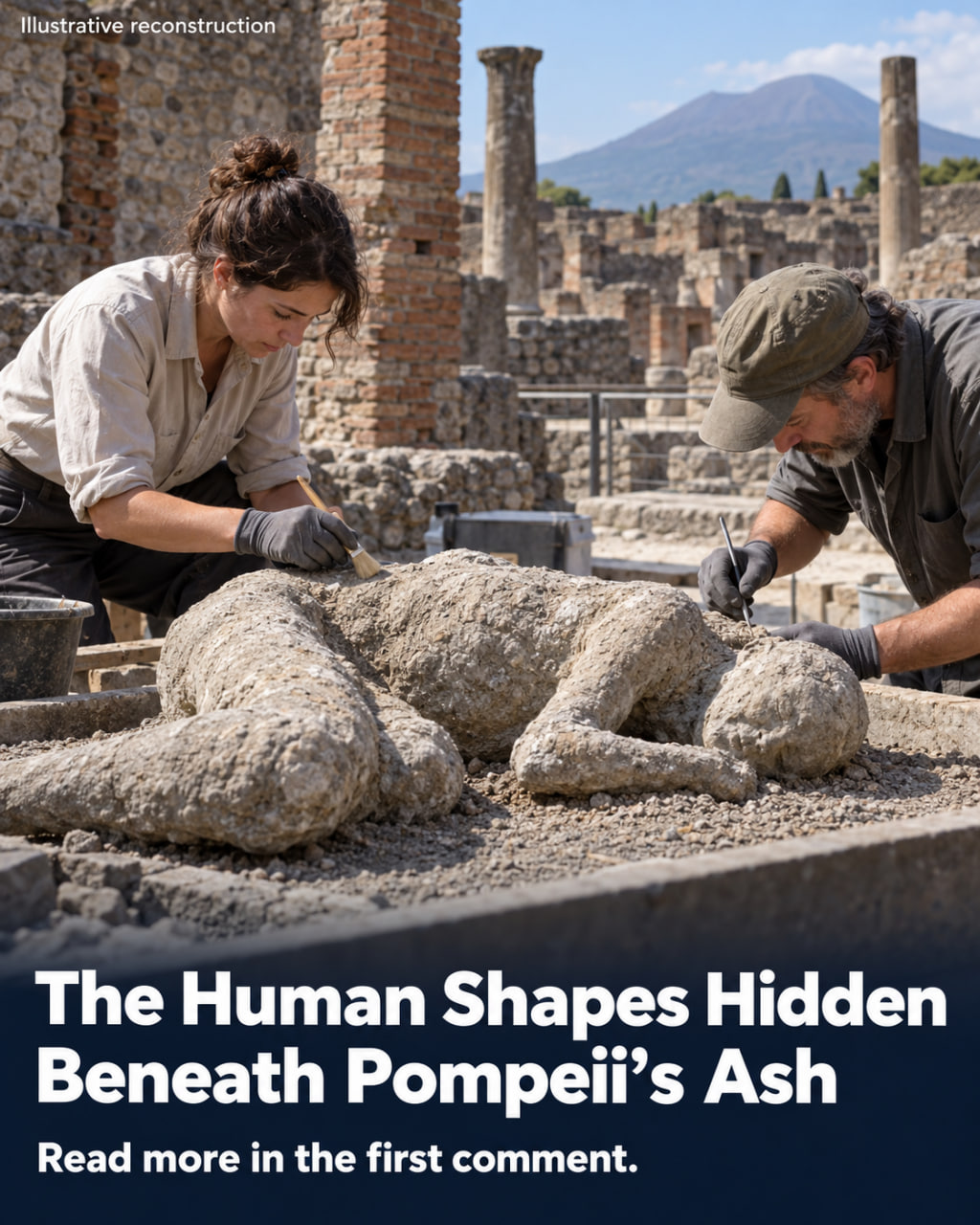
When archaeologists excavated Pompeii, they found more than buildings and objects. Beneath the volcanic deposits were hollow spaces that preserved the shapes of people who had died nearly two thousand years earlier.
Those spaces made it possible to create the haunting plaster casts associated with the ancient Roman city.
How the Impressions Survived
In AD 79, Mount Vesuvius erupted and buried Pompeii beneath volcanic material. Some victims became enclosed in deposits that hardened around them.
As their soft tissues decomposed, cavities remained. These spaces retained impressions of their bodies and, in some cases, details of their clothing.
The familiar figures seen today are casts made from those cavities. They are not people whose bodies simply turned to stone.
The Method That Revealed Them
In 1863, excavation director Giuseppe Fiorelli successfully applied a technique that would transform the study of Pompeii’s victims.
Liquid plaster was poured into the spaces left behind. Once it hardened, the surrounding material could be carefully removed, revealing the shape preserved inside.
The results brought a human presence to the ruins. A street or room could now be understood as a place where someone had lived—and where their life had ended.
What the Casts Can Tell Us
The casts preserve valuable evidence about the victims’ positions and the circumstances of their burial. However, appearance alone cannot reliably establish who they were, how they were related, or what they were thinking.
Researchers continue to study the skeletal remains within some casts. Modern analysis has even challenged earlier assumptions about the identities and relationships of particular victims.
A Personal View of an Ancient Disaster
Pompeii’s houses, streets, and everyday objects reveal how people lived. The casts show how suddenly that ordinary life could be interrupted.
Their power comes from the physical impressions left behind: traces of individuals whose names may never be known, preserved beneath the remains of their city.