
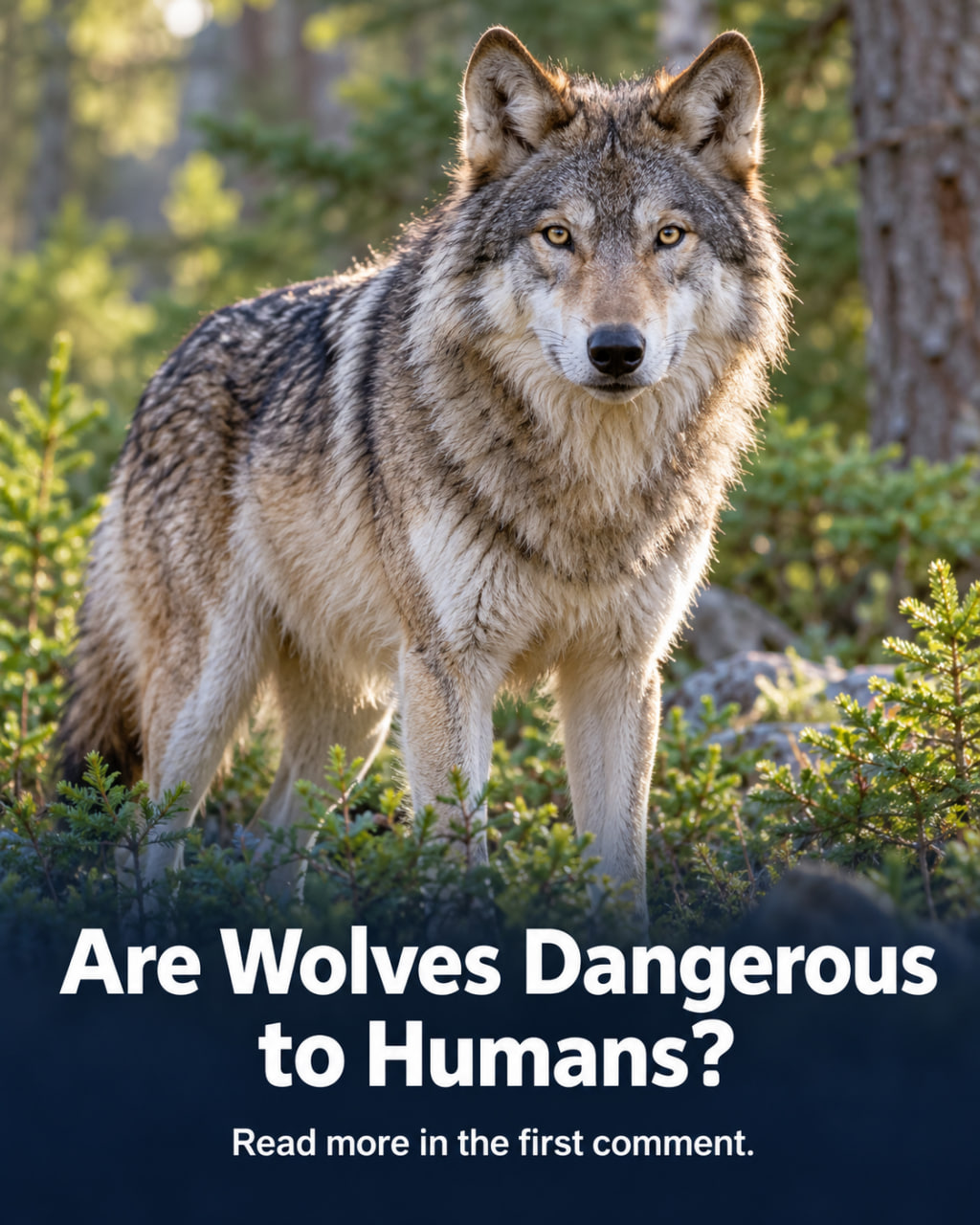
Seeing a wolf in the wild can be intimidating. These powerful predators have a reputation shaped by frightening stories, films, and folklore. But how much danger do they actually pose to people?
Wolves can injure or kill humans, but attacks are rare. Wild wolves generally avoid people, and seeing one does not automatically mean you are in danger. The important distinction is between an animal passing through an area and one repeatedly approaching people without fear.
What the Research Shows
A Norwegian Institute for Nature Research review examined documented wolf attacks from 2002 to 2020. Researchers identified 489 victims in cases they considered sufficiently credible to classify.
Of those victims, 380 were attacked by wolves with rabies, 67 were involved in predatory attacks, and 42 were involved in provoked or defensive attacks. These figures describe cases the researchers found, rather than a complete count of every attack worldwide.
The findings show that attacks do happen, while also highlighting how uncommon they are relative to the large numbers of people and wolves sharing the same landscapes.
When Does the Risk Increase?
Feeding wolves is a major concern. A wolf that finds food around people may begin associating humans with an easy meal. Over time, it can become bolder and approach places it would otherwise avoid.
Rabies is another risk factor. Many of the victims identified in the research were attacked by rabid animals. However, healthy wolves have also been responsible for serious attacks, so disease does not explain every incident.
Direct interference can create dangerous situations too. Trying to handle, trap, or physically confront a wolf puts a person much closer to the animal than an ordinary sighting would.
What Should You Do If You See a Wolf?
Keep your distance and give it space to leave. Do not approach it for a photograph, offer food, or attempt to touch it. Keep children close and dogs on a leash.
If a wolf approaches too closely, do not run. Stand tall, face the animal, wave your arms, and shout firmly. If it continues approaching, wildlife authorities recommend stronger deterrents, such as throwing objects toward it or using bear spray where permitted.
Report repeated close approaches or threatening behavior to local wildlife authorities.
Respect Without Panic
Wolves deserve caution because they are powerful wild animals. But treating every sighting as an impending attack exaggerates the danger.
The practical approach is straightforward: observe from a distance, keep food and garbage secure, and take unusually bold behavior seriously. Most encounters do not lead to an attack, but maintaining that distance helps protect both people and wolves.